

This is part 5 in the series of the 6 key facets of wellbeing
Part 1: Connection: The Foundation of Wellbeing
Part 2: Activity: The Second Core Driver of Wellbeing
Part 3: Learning: The Third Facet of Wellbeing
Part 4: Appreciation the Fourth Facet of Wellbeing: A Journey into Mindfulness and Self-Compassion
Releasing the Spring
Deep within us, the impulse to give is part of our design, running through both mind and body. That tension inside us is like a coiled spring waiting to be released. When that spring uncoils, something remarkable happens, generosity nourishes both the receiver and the giver. Like a shared breath, generosity creates a rhythm of connection that strengthens both sides. Acts of giving engage the brain’s reward pathways, releasing oxytocin, the “bonding hormone” and easing stress while deepening social trust[i].
Giving in the Small – The Selfish Upgrade
The tiniest moves can flip your whole system: a smile, a thank-you, a hand that steadies the door for someone behind you. These sparks trigger biochemical reactions. Everyday kindness lights up reward circuits, softens stress, and thickens the threads of connection that hold us together. This isn’t soft, it’s smart human biology.
The only condition: Make sure your act lands with ease. If it drags, that’s not generosity. If it lifts, it’s real giving, growing both you and your connection with the world.
Try one micro-gesture each day. If it sparks energy, repeat it. If not, pause and recalibrate. That’s where selfish biology turns into self-mastery.
Giving in the Large – The Rebellious Act
Giving at scale isn’t fantasy, it’s radical but real. Time is your most precious resource, and every moment is claimed by work, family, health, and life’s endless demands. Channelling some of that time into others is defiance, but it must align with your rhythm, never drain it.
Large giving isn’t only about big institutions. It can be checking in on a neighbour, supporting a family member, mentoring someone, or even caring for animals, green spaces, or ecosystems. What matters is that the action is freely chosen, matching your energy, not pulled by guilt or peer pressure[ii].
When approached thoughtfully, giving boosts wellbeing and resilience and even appears to lower long-term health risks, with volunteers often outliving peers who don’t give back[iii].
As always: If an act drains you, pause. If it energises you, lean in. That’s where giving becomes a sustainable spark of transformation. The best form of giving is the one that matches your life. If small gestures feel right, that’s enough. If large-scale projects feed you, that works too. As life shifts, your giving scale can shift too, but always anchored in alignment to you.
Mindful Giving – Connecting Inward
Giving isn’t just outward; it can be inward too. Every smile, every moment volunteered, is also a chance to check in with how you’re doing. Mindfulness helps you notice whether the act energises or drains you, and keeps your spring tightly wound. Presence multiplies impact. Being fully present turns giving into true connection. Neuroscience shows presence activates empathy pathways and deepens the reward felt from giving[iv].
Self-compassion is essential. Asking yourself, “Is this act freely chosen?” isn’t indulgence, it is clarity. Compassion without self-compassion is incomplete. When you hold yourself kindly, your giving becomes sustainable and stopping becomes wise.
Giving works best when you are breathing. Put your oxygen mask on first, then help. As you’re instructed when you fly. When your energy aligns, every gesture, either small or large will land right, feeding you as much as it feeds the world.
Feel: At its core, giving is an emotional practice. It begins with tuning into what matters to you and recognizing that giving is not measured in size but in sincerity. The smallest gesture holds equal value when offered from a place of care. See how it feels and how it encourages to do more, perhaps with the environment, a community project, a local family in need, or a global challenge close to your heart. Giving that aligns with your values carries a different resonance. It feels lighter, truer, more sustaining. This is your inner compass, and when acknowledged, giving becomes a mentally nourishing exchange.
Do: Step into action by choosing ways of giving that feel natural and aligned with your own ability and availability. Start small, steady, and genuine, giving should never be forced or draining. Here are some possible pathways:
- Be there for someone who needs to be heard
- Share a skill, or do some pro-bono work for someone in need
- Get local and support a cause that sits in your heart
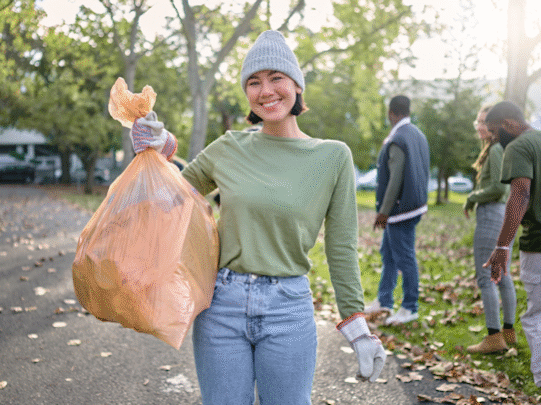
- Contribute to environmental care, from neighbourhood clean-ups to helping set-up nesting boxes
- Give time to a neighbour, a friend, or a stranger who might need some kindness
The form doesn’t matter; the resonance does. No matter the size, what you choose to give has the potential to create lasting echoes of connection and meaning.
Experience: Allow yourself to feel the subtle energy and joy that flows as you engage in acts of giving, big or small, and sense how it resonates within you across time:
- Internally: What sensations or feelings stir; curiosity, calm, fulfilment, or a gentle spark of joy? Notice the small shifts that quietly ripple into your daily experience.
- Externally: What impact does your action have on people, environment, or situation you connect with?
- Connection to wellbeing: Which of the facets of wellbeing have been touched; connection, activity, learning, mindfulness, giving back, or even nourishment?
Lean into this awareness and let it define your practice of giving, as each act, however small, becomes part of your ongoing rhythm. In this way, the resonance and joy of giving are not just moments, but threads in weaving your personal culture.
Next Steps
Giving is a rhythm, not a rule. The energy you release, whether small or large, returns to you, strengthening connection, resilience, and presence. You’ve seen how micro-gestures ripple outward, and how larger acts can shift communities, yet it all begins with aligning your own abilities.
Action Step: Choose one act of giving that feels meaningful this week. Make it tangible. Make it yours and own it. Observe how it lands, with you and the recipient.
However: If you want personalised guidance on integrating giving into your life while enhancing wellbeing across the six facets, book your FREE 20-minute discovery call today. Together, we can explore how coaching helps you create sustainable, energising habits that expand your connection, resilience, and purpose.
References
[i] https://doi.org/10.1097/PSY.0000000000000302. – Inagaki, T. K., & Eisenberger, N. I. (2016). The Neurobiology of Giving Versus Receiving Support: The Role of Stress-Related and Social Reward-Related Neural Activity.
[ii] https://pubmed.ncbi.nlm.nih.gov/11467248/. – Thoits PA, Hewitt LN. Volunteer work and well-being. J Health Soc Behav. 2001 Jun;42(2):115-31. PMID: 11467248.
[iii] https://pubmed.ncbi.nlm.nih.gov/23968220/. – Jenkinson CE, Dickens AP, Jones K, Thompson-Coon J, Taylor RS, Rogers M, Bambra CL, Lang I, Richards SH. Is volunteering a public health intervention? A systematic review and meta-analysis of the health and survival of volunteers. BMC Public Health. 2013 Aug 23;13:773. doi: 10.1186/1471-2458-13-773. PMID: 23968220; PMCID: PMC3766013.
[iv] https://pubmed.ncbi.nlm.nih.gov/25247366/ . – Singer T, Klimecki OM. Empathy and compassion. Curr Biol. 2014 Sep 22;24(18):R875-R878. doi: 10.1016/j.cub.2014.06.054. PMID: 25247366.







1 Comment