SAFETY CHECK
When symptoms need to be checked out
Most neck and upper-quarter tension settles with sensible load management and movement support.
Chest pain or certain symptom patterns should always be checked.
Seek urgent medical help (call 999) if you have:
- sudden chest pain, pressure or tightness that does not ease
- chest discomfort spreading to the arm, jaw, neck or back
- chest pain with shortness of breath, sweating, nausea or feeling faint
- new chest pain during physical effort that is unusual for you
- severe or rapidly worsening symptoms
Contact NHS 111 or your GP promptly if you notice:
- persistent or unexplained chest discomfort
- ongoing deep pain under one or both shoulder blades that does not settle
- progressive arm or hand weakness
- numbness that is constant rather than intermittent
- symptoms following significant trauma
- any symptom pattern that is new, persistent or worrying to you
Most people do not wake up thinking they feel stressed but just carry on with daily life. Often, they notice something else first, perhaps their neck that hurts when turned, or shoulders that feel tight by late afternoon. Sometimes there’s a hard-to-place ache through the forearm with pins and needles in one or two fingers that come and go
Individually, each symptom is easy to brush off. Together, they are often the body’s early way of saying the weekly load is starting to take its toll.
The part many capable people miss
From the outside, life can look perfectly under control, with work is progressing, family life functioning. Most things that need doing are getting done. Which is exactly why many people quietly normalise what their body is telling them.
But the neck feels a bit tighter, energy levels start dropping and recovery takes a bit longer.
Nothing dramatic. Just… different.
For many high-functioning adults, that is the moment where the body begins to speak more clearly than the diary does.
Meet Genevieve
Genevieve is not a real person. She represents the shared experiences of many Pure Body Fix clients.
 Genevieve is 46 and on paper, she is doing well.
She works a hybrid pattern, three days from home, two in the office. Recently promoted into middle management, she is now a line manager, the kind of step forward that brings both progress and pressure.
At home, family life is full but functional, with a Son, 14 and Daughter, 17. A household that runs because someone keeps it moving. Genevieve’s marriage… well, as she half-jokes to close friends, it is not currently the most restful part of her week.
Genevieve would not describe herself as struggling. Busy – yes, and stretched at times. But struggling? Not really.
Small frictions start to appear
Not long ago, Genevieve genuinely enjoyed her CrossFit sessions with her best friend, Suzy. It was their reset.
Lately though, something has changed. She still goes when she can, but she has noticed:
- hesitating before certain lifts
- fatiguing earlier than expected
- being more aware of her neck during workouts
- occasionally thinking about skipping when she normally would not
Around the same time, her body started leaving small clues:
- pain when the neck moves, especially turning the car
- the head not rotating as freely as it used to
- hesitation when lifting or reaching with the arms
- a hard-to-locate ache through the forearm
- pins and needles in one or two fingers that come and go
Nothing dramatic enough to stop her day, but the pattern keeps returning.
A modern working reality
Genevieve does have the use of a proper home office. When she can use it, things generally feel easier. But hybrid life is not always well organised.
When her husband Adam is working from home, the office is taken and Genevieve relocates to the kitchen table. Laptop slightly low. Shoulders subtly rounding forward as the hours tick over.
This reflects modern life and working practices, where many of us now spend long stretches:
- working towards screens
- managing high cognitive demand
- switching frequently between roles
- and getting fewer natural movement breaks than previous generations
The neck and upper chest sit right at the intersection of posture, breathing and visual focus, so they tend to respond quickly when these pressures build.
Most people do not wake up thinking they feel stressed but just carry on with daily life. Often, they notice something else first, perhaps their neck that hurts when turned, or shoulders that feel tight by late afternoon. Sometimes there’s a hard-to-place ache through the forearm with pins and needles in one or two fingers that come and go
Individually, each symptom is easy to brush off. Together, they are often the body’s early way of saying the weekly load is starting to take its toll.
When symptoms need to be checked out
Most neck and upper-quarter tension settles with sensible load management and movement support.
Chest pain or certain symptom patterns should always be checked.
Seek urgent medical help (call 999) if you have:
- sudden chest pain, pressure or tightness that does not ease
- chest discomfort spreading to the arm, jaw, neck or back
- chest pain with shortness of breath, sweating, nausea or feeling faint
- new chest pain during physical effort that is unusual for you
- severe or rapidly worsening symptoms
Contact NHS 111 or your GP promptly if you notice:
- persistent or unexplained chest discomfort
- ongoing deep pain under one or both shoulder blades that does not settle
- progressive arm or hand weakness
- numbness that is constant rather than intermittent
- symptoms following significant trauma
- any symptom pattern that is new, persistent or worrying to you
The part many capable people miss
From the outside, life can look perfectly under control, with work is progressing, family life functioning. Most things that need doing are getting done. Which is exactly why many people quietly normalise what their body is telling them.
But the neck feels a bit tighter, energy levels start dropping and recovery takes a bit longer.
Nothing dramatic. Just… different.
For many high-functioning adults, that is the moment where the body begins to speak more clearly than the diary does.
Meet Genevieve
Genevieve is not a real person. She represents the shared experiences of many Pure Body Fix clients.
Genevieve is 46 and on paper, she is doing well.
She works a hybrid pattern, three days from home, two in the office. Recently promoted into middle management, she is now a line manager, the kind of step forward that brings both progress and pressure.
At home, family life is full but functional, with a Son, 14 and Daughter, 17. A household that runs because someone keeps it moving. Genevieve’s marriage… well, as she half-jokes to close friends, it is not currently the most restful part of her week.
Genevieve would not describe herself as struggling. Busy – yes, and stretched at times. But struggling? Not really.
Small frictions start to appear
Not long ago, Genevieve genuinely enjoyed her CrossFit sessions with her best friend, Suzy. It was their reset.
Lately though, something has changed. She still goes when she can, but she has noticed:
- hesitating before certain lifts
- fatiguing earlier than expected
- being more aware of her neck during workouts
- occasionally thinking about skipping when she normally would not
Around the same time, her body started leaving small clues:
- pain when the neck moves, especially turning the car
- the head not rotating as freely as it used to
- hesitation when lifting or reaching with the arms
- a hard-to-locate ache through the forearm
- pins and needles in one or two fingers that come and go
Nothing dramatic enough to stop her day, but the pattern keeps returning.
A modern working reality
Genevieve does have the use of a proper home office. When she can use it, things generally feel easier. But hybrid life is not always well organised.
When her husband Adam is working from home, the office is taken and Genevieve relocates to the kitchen table. Laptop slightly low. Shoulders subtly rounding forward as the hours tick over.
This reflects modern life and working practices, where many of us now spend long stretches:
- working towards screens
- managing high cognitive demand
- switching frequently between roles
- and getting fewer natural movement breaks than previous generations
The neck and upper chest sit right at the intersection of posture, breathing and visual focus, so they tend to respond quickly when these pressures build.
The question many people ask
When the tingling began to travel into her forearm and fingers, Genevieve had the same thought many people do.
“Is this a trapped or impinged nerve?”
It is a fair question. In some cases, nerves can certainly become mechanically irritated or compressed. However, in everyday upper-quarter situations like Genevieve’s, the picture is often more layered.
Neck and shoulder problems commonly reflect the interaction of muscles, tendons, ligaments and fascia working under sustained load, alongside local nerve irritation.
In plain English:
the neck and shoulder tissues are sitting in a tighter space than they used to, so the nearby nerve reacts more quickly to load and position
Why the neck and upper chest often carry the load
If you look across busy adults like Genevieve, a pattern of pain appears again and again. When weekly demands rise, the neck and upper chest are often among the first places the body shows it. This reflects modern life and working practices.
The upper neck and chest region is where several important jobs overlap:
- head support and positioning
- breathing mechanics
- visual focus
- shoulder and arm support
- elements of the body’s alerting response
When breathing drifts higher into the chest, or when we spend long periods leaning towards screens, muscles like the upper trapezius, scalene and sternocleidomastoid are asked to contribute more often than they were designed to.
Add in:
- hours at a laptop
- elbows drifting forward increasing the leverage force on the shoulders
- fewer natural movement breaks
- and a full cognitive load
…and the upper-quarter system can become less comfortable under sustained demand.
Not from one dramatic event, but from accumulation.
Where Pure Body Fix® fits
If Genevieve’s situation feels familiar, the aim is clear.
We are looking to:
- ease what is currently irritated and restricted
- and reduce the chances of the same neck and shoulder problems returning
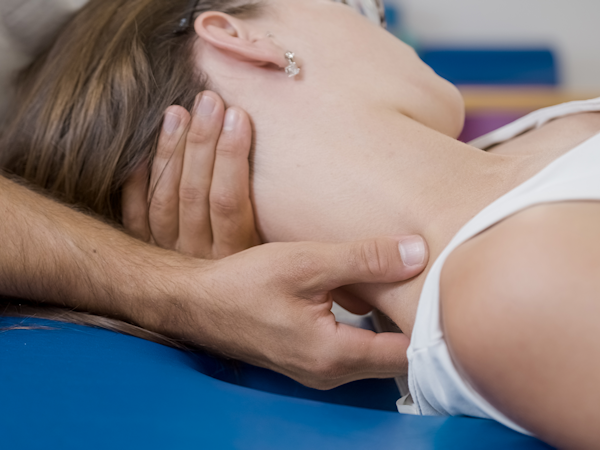
At Pure Body Fix®, remedial massage works directly with the neck and shoulder tissue that have become tight, sensitive or overworked. For many people, this is what first helps the area move more freely and feel less reactive.
But lasting change rarely comes from hands-on work alone.
Prevention is where we work as a team.
Together, we look at the weekly habits and working positions that may be winding the area up, things like prolonged laptop use, elbow position, breathing habits and recovery gaps across the week. Where possible, we make small, realistic adjustments that reduce unnecessary strain.
The goal is not perfection.
It is to give your body more room to cope comfortably with the life you are actually living.
Gentle reader reflection
Feel
Which of these have you noticed in your own week, pain when the neck moves, arm hesitation, forearm ache or pins and needles in one or two fingers?
Do
Be elbow aware and support your arms and challenge long hours on a laptop.
If you regularly work for extended periods on a laptop alone, it is worth addressing. Where possible:
- plug the laptop into a separate monitor
- bring the screen up to eye level
- keep the elbows resting comfortably by your sides
- and break the spell every 30 to 60 minutes
Experience
Beach Time can be a life saver.
In Pure Body Fix® terms, Beach Time is a deliberate time-out that gives the body, breathing and nervous system a chance to settle together.
Aim for around five minutes when you can. Even the time it takes to make a tea or coffee, or to sit with a glass of water, is often enough to remind the system what “less effort” feels like.
Done consistently as part of your routine, these small resets can make a noticeable difference.
Final word
If your neck and shoulders have been getting your attention lately, you are not unusual. You are getting useful feedback. With the right support, many of these patterns can ease and, over time, properly unwind.
You can book your initial remedial massage here: First Appointment for Remedial Massage